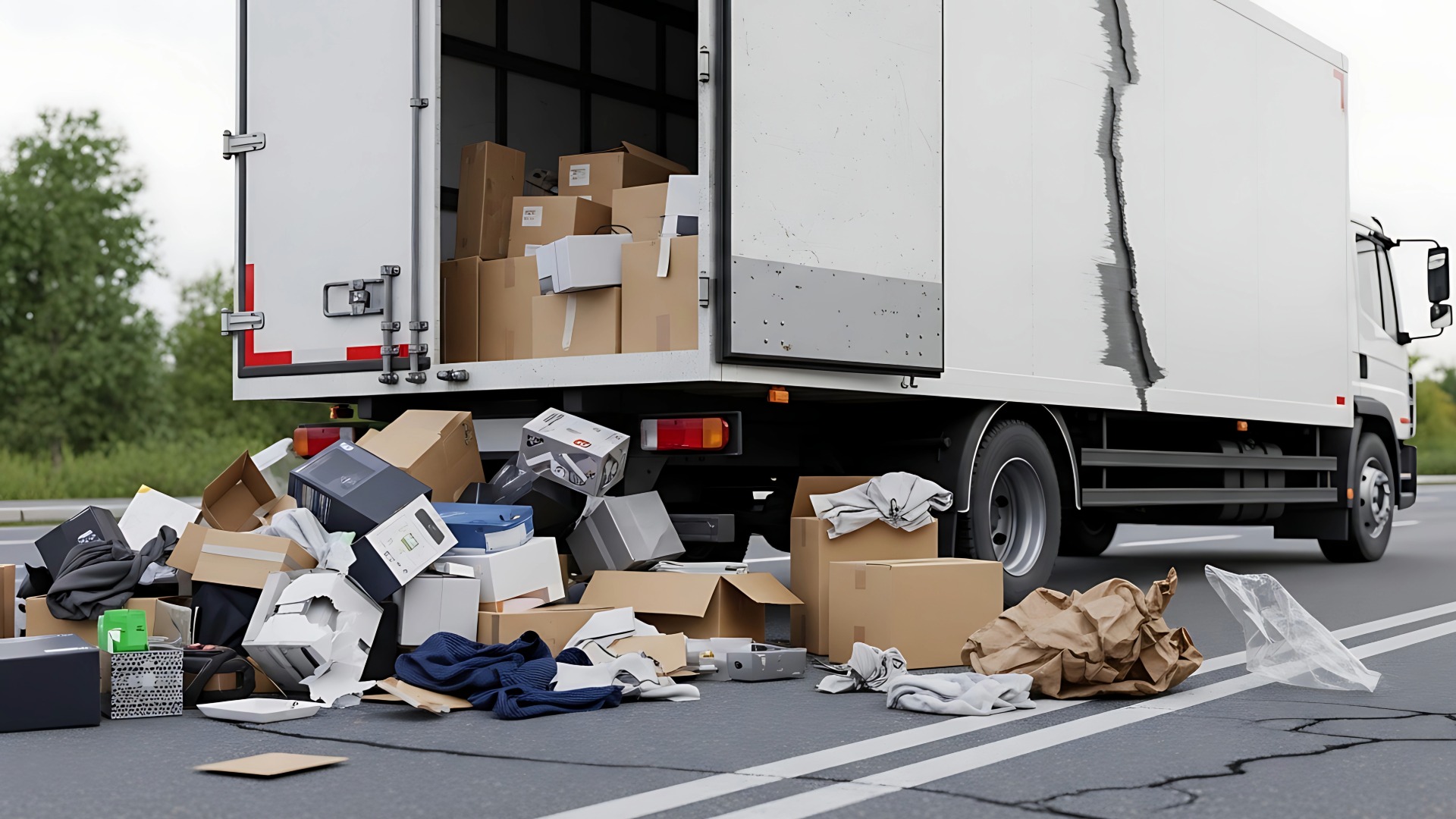
A sofa strap fails on I-75. A ladder slides out of a pickup on Archer Road. A tire tread, a sheet of plywood, or a chunk of construction material appears in the lane with no warning. If you are injured in an accident in Gainesville that is caused by road debris, you are likely concerned about who is responsible for the damage.
The Gainesville accident attorneys at Avera & Smith have spent more than 70 years helping injured people in North Central Florida pursue insurance claims for accidents caused by negligence. However, road-debris cases are different from typical collisions. The at-fault driver may already be gone. The object may look like “just something in the road.” Insurance companies use that confusion.
This article explains how Florida law treats these crashes, who may be responsible, and what evidence matters.
What counts as road debris in a Gainesville accident?
Road debris is any object in a travel lane that should not be there. Common examples on local roads and nearby interstates include:
- Unsecured cargo: lumber, furniture, appliances, tools, coolers, landscaping equipment
- Construction materials: cones, gravel, pipe, metal plates, broken asphalt
- Vehicle parts: blown tire treads (“road gators”), mud flaps, trailer parts
- Storm or roadside objects: branches, trash bags, signs blown into the lane
- Leftovers from a prior crash that were never cleared
The legal question is not only “what hit the car?” It is also “who created the hazard, who should have prevented it, and who had a duty to warn or remove it?”
Who is responsible for a road debris accident in Florida?
Responsibility depends on the source of the debris, and more than one party can share fault.
- The driver or owner who dropped the load. Florida law requires vehicles to be loaded so cargo does not drop, shift, leak, blow, or escape. That duty applies to commercial trucks and to everyday drivers hauling furniture, yard waste, or home-improvement materials. If a load was not secured and it causes a crash, that driver—and often the vehicle owner—may be liable.
- A trucking company, employer, or cargo loader. When a work vehicle sheds cargo, liability can reach beyond the person behind the wheel. The company may be responsible for the driver’s on-the-job conduct. A shipper, warehouse, or loading crew may share fault if the load was stacked, strapped, or tarped incorrectly before the truck entered a public roadway.
- A construction company or road contractor. Work zones around Gainesville and Alachua County can leave materials, equipment, or broken pavement in or near travel lanes. A contractor that fails to secure a site, mark a hazard, or clear the roadway after work may be responsible.
- A government agency, in limited cases. City, county, or state agencies have duties to maintain public roads. Claims against the government are narrower than claims against private drivers. Notice requirements, shorter deadlines, and immunity rules often apply. These cases need prompt legal review.
- Another motorist who reacted unsafely. If a driver ahead slams on the brakes or swerves without regard for traffic behind them, that driver may share fault even if debris started the chain of events. Florida’s comparative-fault rules can split responsibility among several people.
- Your own insurer, when the source cannot be identified. If no one saw the object fall and the vehicle that dropped it cannot be found, you may need to use your own collision, comprehensive, or uninsured motorist coverage. That is not the same as “no one is at fault.” It means the at-fault party has not been identified yet.
What does Florida law require for secured loads?
Florida Statute 316.520 is the core rule. A vehicle may not be driven on a highway unless it is constructed or loaded so that the load cannot drop, shift, leak, blow, or otherwise escape. Owners and drivers hauling dirt, sand, gravel, trash, or other objects have a duty to keep that material from falling or blowing off the vehicle. Covering and securing the load with a tarp or a proper securing device is how the statute says that duty is met.
A violation of this statute can support a negligence claim. For commercial trucks, federal cargo-securement rules add another layer. A willful violation that causes serious injury or death can also carry criminal traffic consequences. For an injured driver, the civil point is simpler: Florida already says loads must stay on the vehicle.
Can you recover if you swerved and never hit the debris?
Yes, in many cases. Liability turns on whether the debris created an emergency that led to the crash. You do not have to strike the object itself. A sudden stop, a lane change into another vehicle, or a loss of control while avoiding a mattress or tire tread can still be caused by the person who put the hazard in the road.
Insurers often argue that you “overreacted” or were following too closely. That is why photos, dashcam video, witness names, and the exact location matter. The question is whether a reasonably careful driver in your position would have faced the same sudden hazard.
How does Florida’s fault system affect a debris crash?
Florida uses modified comparative fault. If you are found more than 50 percent at fault, you may be barred from recovering in that negligence claim. If you are 50 percent or less at fault, your compensation can be reduced by your share.
That rule is why debris cases get contested. An insurer may admit an object was in the road, then argue you should have seen it sooner, driven slower, or chosen a different lane. Accident attorneys look at lighting, traffic speed, whether the object was visible, and how little time you had to react.
What should you do after a Gainesville accident caused by road debris?
- Check for injuries and call 911.
- Move out of traffic only if it is safe.
- Photograph the debris before it is cleared.
- Collect witness information.
- Seek medical care the same day, even if you feel “just shaken.”
- Notify your insurer of the crash, but do not guess about fault.
- Talk with accident attorneys before giving a recorded statement to the other company’s adjuster.
Delays help the defense. Debris gets swept up. Vehicles leave. Soreness the next morning is harder to connect to the crash if you wait a week to see a doctor.
What compensation can a road debris claim include?
Depending on the facts and the available insurance, a claim may include:
- Emergency care, follow-up treatment, and future medical needs
- Lost wages and reduced earning capacity
- Vehicle repair or total-loss value
- Pain, limitations, and loss of normal life
- In fatal cases, wrongful death damages for the family
Florida’s no-fault PIP coverage may pay some initial medical bills and a portion of lost wages, but PIP is limited. Serious injuries often require a claim against the at-fault party or UM coverage.
Injured in a Gainesville accident caused by road debris?
Call 352-372-9999 for a free consultation
A debris crash is easy for an insurance company to minimize. They may call it unavoidable, blame your reaction, or say no one can prove where the object came from. That is exactly when you need accident attorneys who know how Gainesville wrecks are investigated and how Florida liability actually works.
Call Avera & Smith because these cases turn on proof, not luck. Someone has to identify the source of the debris, preserve what is left of the scene, and connect that hazard to your injuries. Photos get deleted. Objects get swept off I-75, Archer Road, or Newberry Road. Witnesses leave. The sooner a local firm is involved, the harder it is for the other side to rewrite what happened.
Call because more than one party may owe you compensation. The claim may involve a driver who failed to secure a load, a trucking company, a loading crew, a construction contractor, or, in limited cases, a government agency. Avera & Smith looks past the first insurance policy on the table and identifies every responsible party.
Request a free case review through our online form or call 352-372-9999 to speak with our attorneys.
Frequently asked questions about accidents caused by road debris
Who pays if debris falls off a truck and hits my car?
If the truck or driver can be identified, their insurance—and often the company’s—may be responsible. If they cannot be identified, your collision, comprehensive, or uninsured motorist coverage may apply.
Can a construction company be liable for debris in the road?
Yes, if the company created the hazard or failed to keep the work area reasonably safe for traffic.
Can I sue the city or FDOT for debris on the road?
Sometimes, but government claims have special notice rules, damage caps, and proof requirements. Talk with a lawyer quickly.
What if I hit debris and I was speeding?
You may still have a claim if you are not more than 50 percent at fault. Your recovery can be reduced by your percentage of fault.
Does PIP cover a road debris crash?
PIP may cover a portion of medical bills and lost wages after a Florida auto accident, regardless of fault, up to your policy limits. It usually does not cover full injury damages.
How long do I have to file a lawsuit?
Many Florida injury claims must be filed within two years. Claims involving government agencies can have much shorter notice deadlines. Do not wait to get the date confirmed for your facts.
Should I give a recorded statement to the insurance company?
Not before you understand the claim. Recorded statements are often used to shift blame onto the injured driver.
Do I need accident attorneys if my car is the only thing damaged?
Property-only claims can sometimes be handled through insurance. If you have injuries, missed work, or a disputed fault story, speak with a lawyer before the claim is closed.
If you were hurt in a Gainesville accident caused by road debris, falling cargo, or an object you had no time to avoid, contact Avera & Smith at 352-372-9999 for a free consultation.